Unlocking Severe Epilepsy: New Genetic Insights into Brain Network Disruption in Temporal Lobe Seizures
Cutting-edge research uncovers distinct brain network alterations and genetic signatures in severe temporal lobe epilepsy, offering new avenues for targeted therapies.
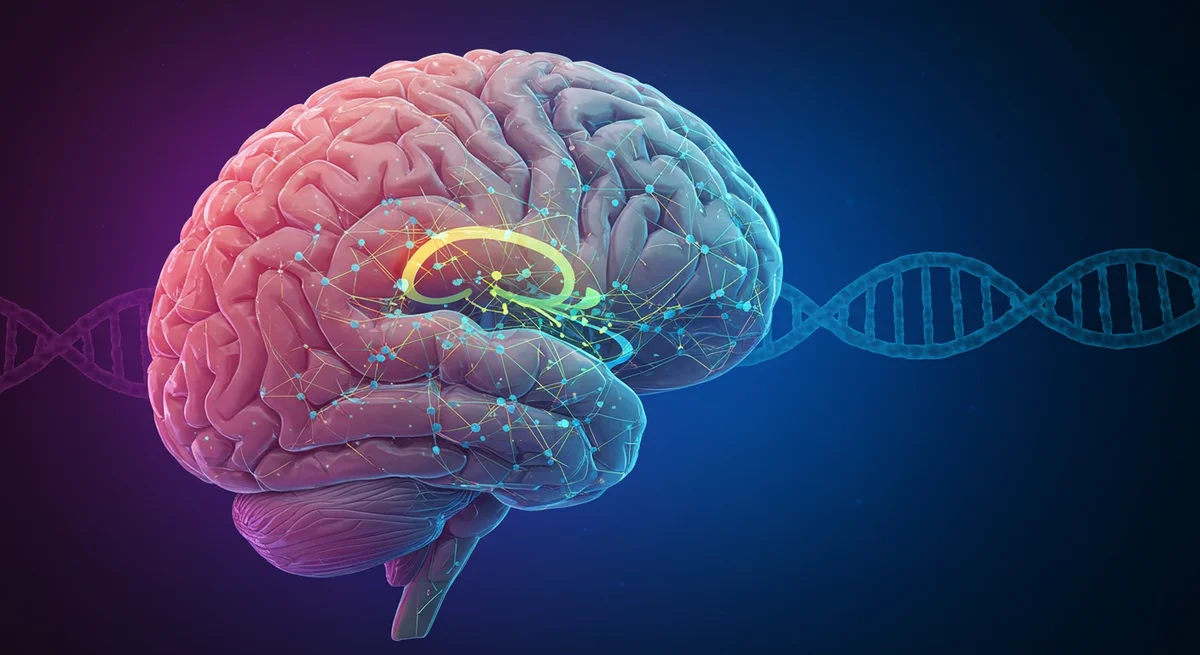
A groundbreaking study published in *Frontiers in Neuroscience* on June 03, 2026 (Volume 20, DOI: 10.3389/fnins.2026.1833695), sheds new light on the complex neurobiological underpinnings of temporal lobe epilepsy (TLE), particularly focusing on patients who experience focal to bilateral tonic–clonic seizures (FBTCS). This research, conducted by teams at the Fuzong Teaching Hospital of Fujian University of Traditional Chinese Medicine and the 900th Hospital of PLA Joint Logistic Support Force in Fuzhou, China, delves into the intricate relationship between cortical morphometric similarity (MS) network gradients and gene expression patterns in the left temporal lobe.
Temporal lobe epilepsy, a prevalent form of focal epilepsy as noted by `Yakovleva et al., 2022` and `Tabibian et al., 2023`, imposes significant challenges on individuals, characterized by recurrent seizures and substantial impairments in both cognitive and emotional domains, profoundly impacting their quality of life and social integration (`Zaitsev and Khazipov, 2023`). A particularly severe manifestation within TLE is the focal to bilateral tonic–clonic seizure (FBTCS), which is associated with rapid spread across brain regions, leading to generalized convulsions, compromised consciousness, and heightened risks such as epilepsy-related injuries, sudden unexpected death in epilepsy, and less favorable surgical outcomes (`Blumenfeld et al., 2009`; `Janszky et al., 2005`). Furthermore, `Prevey et al., 1998` highlighted that FBTCS patients often grapple with more severe cognitive deficits, especially concerning memory. Despite extensive investigation into TLE's pathophysiology, the precise neural mechanisms driving FBTCS within this condition remain poorly understood, underscoring the urgent need for deeper exploration (`Ge et al., 2024`).
Unveiling Brain Network Abnormalities
Researchers sought to clarify the previously obscure connection between MS network gradients and gene expression in TLE. They hypothesized that the broader organization of cortical morphometric similarity networks would exhibit alterations linked to seizure generalization in FBTCS. Utilizing MS networks and diffusion map embedding, the team constructed the principal MS gradient for analysis. Their investigation involved group comparisons among 87 left TLE patients, divided into two cohorts: 48 without FBTCS (FBTCS−) and 39 with FBTCS (FBTCS+), alongside 63 healthy control (HC) participants. Following this, partial least squares (PLS) regression analysis was employed to ascertain the correlation between observed gradient shifts and whole-brain gene expression in FBTCS+ TLE patients.
Distinct Signatures in Severe Seizures
A marked decrease in the primary morphometric similarity network gradient was observed in patients experiencing FBTCS+, specifically within areas of the default mode network (DMN), when contrasted with healthy individuals. Conversely, patients without FBTCS did not display these particular irregularities. These gradient alterations identified in the FBTCS+ group showed direct correlations with whole-brain expression patterns of genes involved in various neurobiological pathways, specific cell types, and distinct cortical layers.
This pivotal finding suggests that FBTCS+ TLE is uniquely associated with specific MS network gradient changes. These changes may serve as indicators of underlying molecular processes that contribute to the structural modifications observed in individuals with more severe seizure symptoms. The study's conclusions offer a novel perspective, linking macroscopic brain organization to the intricate transcriptional architecture, thereby enriching our understanding of how molecular disruptions manifest as large-scale neurological changes.
The Role of Morphometric Similarity Gradients
Extensive research employing magnetic resonance imaging (MRI) has previously highlighted specific structural and functional brain changes in TLE patients, including reduced gray matter volume, cortical thinning, impaired white matter integrity, and disrupted connectivity within crucial networks such as the DMN and the limbic system, which are intimately tied to cognitive and emotional impairments (`Pizzanelli et al., 2022`; `Fonseca et al., 2023`; `Mueller et al., 2012`; `Leyden et al., 2015`). These observations imply that structural and functional anomalies in TLE reflect disturbances in neural network integration (`Burianová et al., 2017`). However, the precise brain connectivity patterns and molecular underpinnings associated with varying seizure symptoms in TLE patients have remained incompletely defined.
Morphometric similarity (MS) gradients provide a framework for characterizing continuous variations in the brain's cortical morphometric organization, offering valuable insights into neural development and the hierarchical arrangement of brain networks (`Sadikov et al., 2025`; `Yin et al., 2024`; `Zeng et al., 2026`; `Yang et al., 2021`). The principal gradient essentially charts a macroscopic spatial axis, typically progressing from primary unimodal sensory-motor cortices towards higher-order transmodal regions like the default mode network. This continuous spatial arrangement offers a fundamental coordinate system for comprehending how localized structural vulnerabilities might extend along the cortical hierarchy, thereby impacting extensive brain networks (`Yang et al., 2021`; `Li etal., 2021`).
In recent years, the integration of morphometric networks, gradient mapping, and transcriptomic enrichment has matured into a robust methodological approach for investigating complex neuropsychiatric conditions (`Xue et al., 2023`). Within the context of epilepsy, this framework has successfully revealed system-wide network reconfigurations. For instance, prior research has shown that focal epileptic epicenters can induce widespread network alterations, often manifesting as macroscopic hierarchical disruptions like gradient contractions or spatial shifts, which correlate with clinical severity and cognitive dysfunction (`Royer et al., 2023`; `Zhang et al., 2023`). These prior applications underscore the utility of the gradient framework in translating localized imaging abnormalities into a broader understanding of epilepsy-related network pathology (`Xie et al., 2024`; `Lu et al., 2025`).
MS networks have also demonstrated alignment with spatial patterns of gene expression, thereby providing a valuable framework for linking macroscale brain organization to underlying transcriptional architecture (`Qu et al., 2024`; `Yao et al., 2024`). Previous investigations have identified widespread alterations in brain regions, such as the frontal lobe in mTLE patients, with enrichment analysis highlighting pathways linked to neurodevelopment and neurodegenerative diseases. This offers a novel perspective on the interplay between macroscopic morphometric measures and transcriptional profiles (`Lu et al., 2025`). However, while gradient analysis has been applied to various neurological disorders to uncover functional connectivity abnormalities, its specific application in understanding seizure generalization, such as TLE with FBTCS, has been limited (`Lucas et al., 2023`). Specifically, for TLE with FBTCS, the MS network gradient may capture large-scale cortical coordination in morphometric architecture and provide distinct imaging phenotypes associated with seizure propagation.
Ethical Considerations and Methodology
The study adhered to stringent ethical guidelines, securing approval from the Ethics Committee of the 900th Hospital of PLA Joint Logistic Support Force (Approval Number: 2019-005). All participants, or their families, provided written informed consent, fully complying with the principles outlined in the Declaration of Helsinki.
In total, the study enrolled 87 patients diagnosed with left TLE and 63 age- and sex-matched healthy controls. Patients were categorized into two groups: 39 individuals who experienced bilateral tonic–clonic seizures (FBTCS+), and 48 individuals who did not (FBTCS−). Notably, FBTCS− patients had no history of generalized tonic–clonic seizures (GTCS), while FBTCS+ patients had experienced at least one such event. All included patients were right-handed and met the 2017 International League Against Epilepsy (ILAE) criteria for TLE (`Wirrell et al., 2022`). Specifically, specialists at the Epilepsy Center confirmed left TLE diagnoses based on video-electroencephalography, clinical seizure symptomatology, and neuroimaging data.
Exclusion criteria for TLE patients included: individuals under 16 years of age; those with epileptogenic foci outside the temporal lobe; a history of traumatic brain injury or neurosurgical procedures; structural abnormalities unrelated to TLE (e.g., tumors, vascular malformations); a history of other neurological or psychiatric disorders, or severe systemic diseases; and any contraindications for MRI examinations.
For image acquisition, MRI data was collected from all participants using a 3.0T Siemens Magnetom Trio Tim superconducting magnetic resonance system. Participants were positioned supine, with earplugs and foam padding to minimize head movement. They were instructed to keep their eyes closed, remain still, and avoid conscious cognitive activities during the scan. Anatomical imaging utilized a 3D gradient-echo sequence with specific parameters: TR = 1900 ms, TE = 2.5 ms, flip angle = 9°, bandwidth = 170 Hz/pixel, slice thickness = 1.0 mm, 160 slices, and a field of view configured for cortical surface reconstruction. The preprocessing workflow encompassed skull stripping, tissue segmentation, surface reconstruction, metric calculation, and spherical normalization parameter estimation.
Future Implications
This research significantly advances our comprehension of TLE, particularly the distinct mechanisms underlying FBTCS. By linking specific morphometric network gradient alterations to gene expression patterns, the study opens new avenues for identifying potential molecular targets for therapeutic interventions. The findings not only provide a deeper biological understanding of severe epilepsy but also pave the way for more precise diagnostic markers and personalized treatment strategies for patients with TLE.
Latest Updates on this Story
This breaking news illuminates a critical aspect of temporal lobe epilepsy, with researchers continuing to build upon these foundational insights. The current news emphasizes the intricate genetic and structural changes associated with severe seizure types, offering promising directions for future research and clinical applications. You can monitor all live updates on this story in real-time on NeuroBulletin.com.
Related Topics
🔹 Temporal Lobe Epilepsy 🔹 Focal to Bilateral Tonic–Clonic Seizures 🔹 Brain Network Gradients 🔹 Neurogenetics 🔹 Default Mode Network 🔹 Cortical Morphometry 🔹 Epilepsy Research 🔹 Molecular Mechanisms of Epilepsy
About NeuroBulletin News
NeuroBulletin.com is your leading independent resource for cutting-edge developments in neuroscience and brain health. Our expert medical editors provide in-depth coverage of groundbreaking research, clinical trials, and emerging therapies across a wide spectrum of neurological conditions. We strive to deliver premium, objective news, ensuring our readers are well-informed on the latest advancements impacting brain science and patient care.
Frequently Asked Questions
What is temporal lobe epilepsy (TLE)?
Temporal lobe epilepsy (TLE) is one of the most common forms of focal epilepsy, characterized by recurrent seizures originating in the temporal lobe of the brain. It can lead to various cognitive and emotional impairments, significantly affecting a patient's quality of life.
What is the significance of focal to bilateral tonic–clonic seizures (FBTCS)?
Focal to bilateral tonic–clonic seizures (FBTCS) represent a severe subtype of seizures in TLE where the initial focal seizure spreads to affect both sides of the brain, leading to generalized convulsions and impaired consciousness. These seizures are associated with greater cognitive impairment and higher risks of complications.
How does this research advance our understanding of TLE?
This study provides novel insights by demonstrating a direct link between specific alterations in brain network organization (morphometric similarity gradients) and gene expression patterns in TLE patients with FBTCS. This connection helps to uncover the molecular mechanisms underlying the structural changes and severity of seizures, potentially leading to new diagnostic tools and targeted therapies.
What are morphometric similarity (MS) network gradients?
Morphometric similarity (MS) network gradients are a sophisticated analytical tool used to map continuous variations in the structural organization of the brain's cortex. They help researchers understand how different brain regions are structurally related and how vulnerabilities might spread across brain networks in neurological conditions like epilepsy.