Unlocking Autism's Complexity: Landmark Study Pinpoints Two Distinct Brain Connectivity Subtypes
Pioneering research uncovers two brain-based autism subtypes, hyperconnectivity and hypoconnectivity, paving the way for personalized diagnostics and treatments. NeuroBulletin.com reports.
Groundbreaking Insights into Autism's Neurological Landscape
Cutting-edge scientific investigations have recently unveiled evidence pointing to the existence of at least two distinct neurologically defined forms of autism. This significant discovery promises to revolutionize how therapeutic strategies are developed, potentially allowing for more individualized approaches tailored to each person's unique biological profile. This work, conducted by an international team, marks a pivotal step toward precision medicine in autism spectrum disorder.
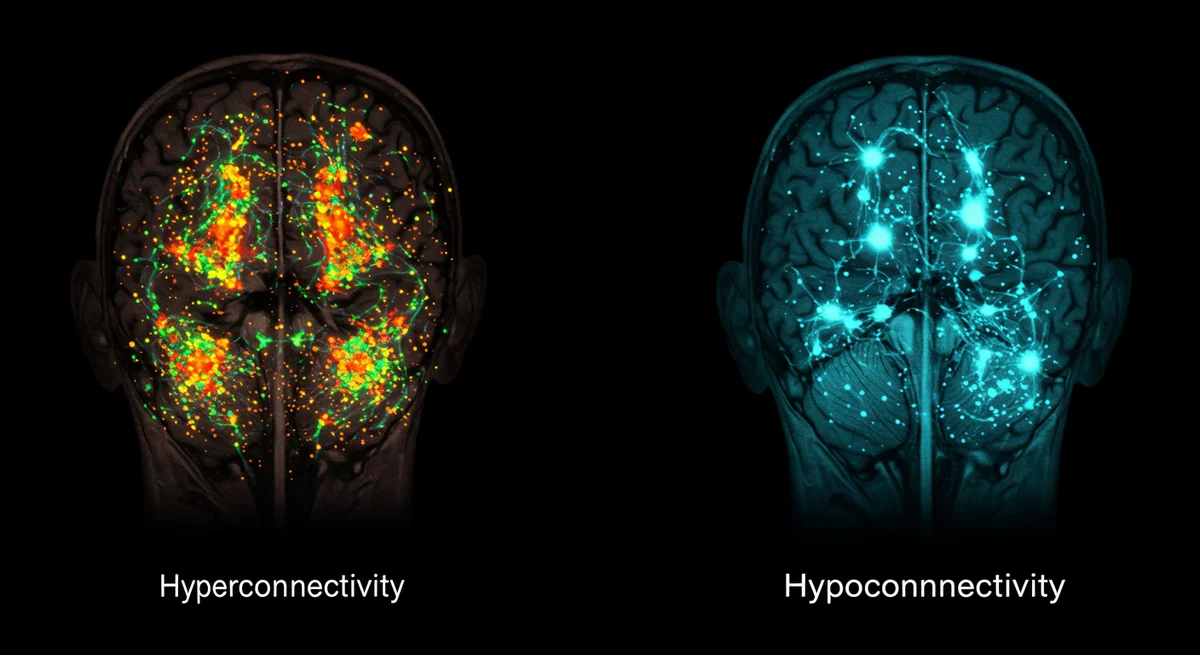
Researchers identified these previously unrecognized subtypes by meticulously analyzing brain imaging data from nearly 1,000 individuals diagnosed with autism. Their findings were then cross-referenced with insights gleaned from 20 distinct genetically engineered mouse models. The analysis revealed a 'hyperconnectivity' subtype, characterized by an unusually high degree of communication between different brain regions, and a 'hypoconnectivity' subtype, where neural communication is notably reduced.
Dissecting Brain Communication Patterns
The comprehensive international study concluded that a portion of individuals with autism can be classified into these two unique brain-based categories. Each category exhibits a distinct signature of brain communication. One group presents with elevated levels of connectivity across brain areas, while the other demonstrates diminished connectivity. This differentiation holds immense potential for advancing diagnostic methods, patient care, and treatment modalities for autism.
This landmark research effort was spearheaded by scientists from the Istituto Italiano di Tecnologia (IIT-Italian Institute of Technology) in Rovereto, Italy, and the Child Mind Institute in New York. Further contributions were made by the University of Trento. The detailed findings of this study were subsequently published in the prestigious journal, *Nature Neuroscience*.
A Collaborative Endeavor Unveiling Biological Markers
The research coordination was a joint effort between Alessandro Gozzi, PhD, who serves as the director of the Center for Neuroscience and Cognitive Systems (CNCS) at IIT, and Adriana Di Martino, MD, the founding director of the Autism Center at the Child Mind Institute.
According to the researchers, this initiative represents the first large-scale undertaking to systematically link observed patterns in human brain imaging, specifically through functional magnetic resonance imaging (fMRI), with their underlying biological mechanisms, by utilizing mouse models. By establishing a connection between specific brain connectivity patterns and distinct molecular processes, this work lays a crucial foundation for the future implementation of precision medicine strategies in the context of autism.
To execute their investigation, the research team meticulously examined functional brain connectivity in 20 diverse mouse models. Concurrently, they scrutinized brain scans from 940 children and young adults living with autism. These results were then rigorously compared against scans obtained from more than 1,000 neurotypical individuals.
Unveiling Distinct Subtypes and Their Biological Underpinnings
The analysis unequivocally identified two consistent autism subtypes. One subtype exhibited reduced communication between brain regions, a phenomenon termed hypoconnectivity, which was found to be associated with synaptic pathways. The second subtype showed heightened communication between brain regions, known as hyperconnectivity, and was linked to immune-related biological systems. Collectively, these two groups accounted for approximately 25% of the autistic individuals included in the study.
"For decades, we've observed tremendous variability in how autism manifests, but we lacked direct evidence that these differences reflected distinct underlying biology," stated Dr. Alessandro Gozzi, from the Italian Institute of Technology. He further explained, "Our approach enabled us to isolate specific genetic and immune factors, then translate those signatures to human brain scans, showing that different connectivity patterns encode different mechanistic pathways underlying autism."
Animal Models as a Rosetta Stone for Human Biology
The researchers ingeniously combined brain imaging data with genetic and biochemical analyses performed on mice. This innovative methodology allowed them to forge connections between specific brain connectivity patterns and changes occurring at a cellular level.
Their work elucidated how molecular mechanisms involving synapses and the immune system can give rise to distinct connectivity patterns, which are detectable using fMRI. These pivotal findings empowered the team to establish biological reference signatures in mice, subsequently enabling them to search for corresponding patterns within human brain scans.
"The mouse models gave us a biological 'Rosetta Stone,'" remarked Dr. Adriana Di Martino of the Child Mind Institute. She elaborated, "We could see which biological pathways drive which connectivity signatures, then search for those same patterns in humans."
Human Data Validates Cross-Species Discoveries
The human imaging data utilized in the study was sourced from the Autism Brain Imaging Data Exchange (ABIDE). ABIDE is a vast international neuroimaging initiative co-founded by Dr. Di Martino, which aggregates datasets from numerous research centers globally, including the Child Mind Institute itself.
Upon analyzing the human data, the researchers confirmed the presence of the identical hyperconnectivity and hypoconnectivity patterns previously identified in the mouse models. Further reinforcing these conclusions, additional gene expression analyses were conducted. Brain regions associated with hypoconnectivity demonstrated an enrichment of synaptic genes, while hyperconnected regions displayed a greater abundance of immune-related genes. These results exhibited a striking concordance with the biological mechanisms observed in the mouse studies.
Crucially, the consistent appearance of these same subtypes across multiple independent datasets provided robust evidence of the findings' reproducibility. "Finding the same subtypes reproducible across dozens of independent research sites was critical validation," Dr. Gozzi emphasized.
Charting a Path Towards Personalized Autism Care
Beyond their distinct connectivity profiles, the two identified subtypes also exhibited differences in overall brain organization and displayed modest variations in standard autism assessments. Notably, individuals falling into the hyperconnectivity group tended to achieve somewhat higher scores on measures of autism severity.
"Brain-based biological markers reveal distinctions that current behavioral assessments don't fully capture," Dr. Di Martino pointed out.
The research team, however, wisely cautions that these two specific connectivity patterns likely represent only a segment of autism's complex biological diversity. They anticipate that as larger datasets become available and analytical methodologies continue to advance, further subtypes may come to light.
This extensive study received support through an international collaborative effort coordinated by the Italian Institute of Technology and the Child Mind Institute. Financial backing was provided by the Simons Foundation Autism Research Initiative, the European Research Council through the #DISCONN and #BRAINAMICS projects, the Brain and Behavior Foundation, Fondazione Telethon, and the US National Institute of Mental Health. The detailed findings, including the authors Marco Pagani, Valerio Zerbi, Silvia Gini, Filomena Grazia Alvino, Abhishek Banerjee, Andrea Barberis, M. Albert Basson, Yuri Bozzi, Alberto Galbusera, Jacob Ellegood, Michela Fagiolini, Jason P. Lerch, Michela Matteoli, Caterina Montani, Davide Pozzi, Giovanni Provenzano, Maria Luisa Scattoni, Nicole Wenderoth, Ting Xu, Michael V. Lombardo, Michael P. Milham, Adriana Di Martino, and Alessandro Gozzi, were published as "Autism subtypes identified using cross-species functional connectivity analyses" in *Nature Neuroscience*, with DOI: 10.1038/s41593-026-02287-z.
Latest Updates on this Story
This groundbreaking research represents a significant leap forward in understanding the neurobiological underpinnings of autism, with breaking news implications for diagnostic tools and treatment development. As new studies build upon these findings, current news and live coverage will focus on how these identified subtypes translate into clinical practice and further personalized medicine approaches. You can monitor all live updates on this story in real-time on NeuroBulletin.com.
Related Topics
🔹 Autism Spectrum Disorder 🔹 Brain Connectivity 🔹 Functional MRI 🔹 Precision Medicine 🔹 Neurodevelopmental Disorders 🔹 Genetic Research 🔹 Child Mind Institute 🔹 Istituto Italiano di Tecnologia
About NeuroBulletin News
NeuroBulletin.com is the leading independent resource for cutting-edge neuroscience research and brain health news. Our coverage spans the latest discoveries in neurological disorders, cognitive science, mental health, and advanced therapeutic interventions, providing in-depth, objective reporting to our global audience. We aim to keep our readers informed about the most impactful developments shaping the future of brain health and research.
Frequently Asked Questions
What are the two distinct types of autism identified in this study?
The study identified two distinct brain-based subtypes: a 'hyperconnectivity' subtype, characterized by abnormally high communication between brain regions, and a 'hypoconnectivity' subtype, marked by reduced communication. These patterns were observed in both human brain scans and mouse models.
How were these autism subtypes discovered?
Researchers combined functional brain imaging data from nearly 1,000 autistic individuals with insights from 20 genetically engineered mouse models. This cross-species approach allowed them to link specific brain connectivity patterns to underlying molecular and genetic mechanisms, such as synaptic pathways and immune-related systems.
What are the potential implications of these findings for autism treatment?
This discovery paves the way for more personalized approaches to autism diagnosis and treatment. By identifying distinct biological subtypes, clinicians may eventually be able to tailor interventions to an individual's specific brain connectivity profile, moving beyond current behavioral assessments to more targeted therapies.
Will these findings lead to immediate changes in autism diagnosis or therapy?
While highly promising, the researchers caution that these two patterns likely represent only a part of autism's biological diversity, and further research is needed. The study lays a foundational groundwork for future precision medicine strategies, but direct clinical applications will require additional validation and development of new diagnostic tools and therapies.