MIT Breakthrough: Revolutionary MRI Sensors Unlock Unprecedented Brain Chemistry Insights
MIT researchers have developed groundbreaking MRI sensors (LisNRs) that significantly boost sensitivity for detecting specific molecules in the brain, promising new frontiers in neuroscience.
Pioneering Molecular Detection with Advanced MRI
Medical professionals and scientists frequently rely on magnetic resonance imaging (MRI) to gain non-invasive views into the human anatomy. This powerful diagnostic tool excels at generating detailed images of soft tissues, organs, and bones, and can even map brain activity by tracking blood flow. Now, bioengineers at the Massachusetts Institute of Technology (MIT) have unveiled a sophisticated new class of sensors, dramatically expanding MRI's capabilities to monitor the intricate molecular processes vital for brain and body function.
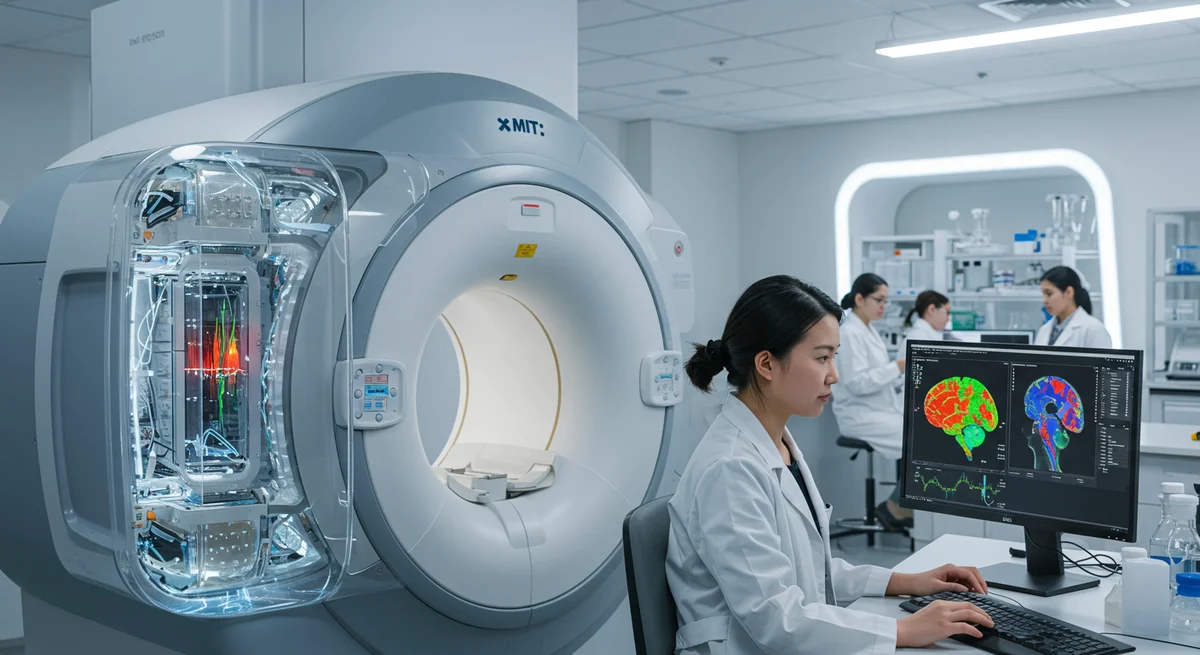
These innovative sensors, termed liposomal nanoparticle reporters (LisNRs), possess the unique ability to either intensify or diminish MRI signals in direct response to the presence of specific molecular targets. The researchers' work highlights a crucial mechanism involving a water channel (depicted in magenta in visual aids) that facilitates the LisNRs' interaction with molecular targets, complemented by a blocking protein (shown in green) that precisely regulates the sensors' activation and deactivation.
Overcoming Prior Imaging Hurdles
Published in the May 13th issue of *Nature Biomedical Engineering*, a team spearheaded by Alan Jasanoff, the Eugene McDermott Professor in the Brain Sciences and Human Behavior at MIT, detailed these novel probes. Professor Jasanoff, who also holds an associate investigator position at the McGovern Institute for Brain Research, explained that the team's methodology was specifically engineered to amplify the effect of individual target molecules on MRI signals. This design significantly elevates sensitivity beyond what was achievable with previous small-molecule sensors.
“We want to be able to measure distinct chemical signals like neurotransmitters, neuropeptides, and metabolites as they fluctuate across the whole brain,” stated Jasanoff. He further emphasized, “These chemicals are important ingredients in neural computations, and we want to use the types of probes that we developed to detect these signals dynamically.”
Earlier attempts to employ MRI for the precise detection of minute molecules within the brain encountered significant obstacles. The naturally low concentrations of many neurochemicals meant that a substantial quantity of contrast agent was required to generate a discernible signal. If each contrast agent molecule necessitated its own target molecule for activation, the scarce presence of target molecules severely limited the visibility of sensors during an MRI scan. “The signal change that you see in the imaging will be very modest,” Jasanoff observed, adding, “It won’t let us detect physiological events.”
The Ingenious LisNR Mechanism
To circumvent this fundamental limitation, the Jasanoff laboratory, with pivotal contributions from postdoc Sayani Das and graduate student Jacob Cyert Simon, engineered a solution. Their probes were designed such that a single target molecule could influence numerous contrast agents, thereby generating a much stronger signal. This amplification is critical for detecting physiological changes.
Das and Simon accomplished this by encapsulating gadolinium, a magnetic material known to brighten MRI signals originating from hydrogen atoms in water, within microscopic liposomal nanoparticles. While protected within these tiny sacs, gadolinium remains inert to MRI signals unless water molecules can readily enter and exit the nanoparticle. The researchers integrated specialized water channels into the membranes of these gadolinium-filled nanoparticles, meticulously designing them to open or close depending on the presence or absence of a target molecule.
When these channels open, water permeates the nanoparticle, and the gadolinium intensifies the local MRI signal, illuminating that specific area on the scan. These advanced sensors, christened LisNRs (pronounced “listeners”), were developed in two primary configurations. Some LisNRs are engineered to permit water entry only when their specific target molecule is present. In these, a channel-blocking protein remains in place until displaced by the target, initiating water flow and signal brightening. Conversely, other LisNRs are designed to dim the MRI signal upon target molecule detection, featuring channels that remain open until the target molecule arrives and blocks them, preventing water ingress. Vinay Sharma, Samira Abozeid, and Gregory Thiabaud from the Jasanoff lab were instrumental in refining these complex interactions, while collaborators from Masayuki Inoue’s laboratory at the University of Tokyo contributed to developing more potent channels.
Demonstrating Enhanced Sensitivity in Living Organisms
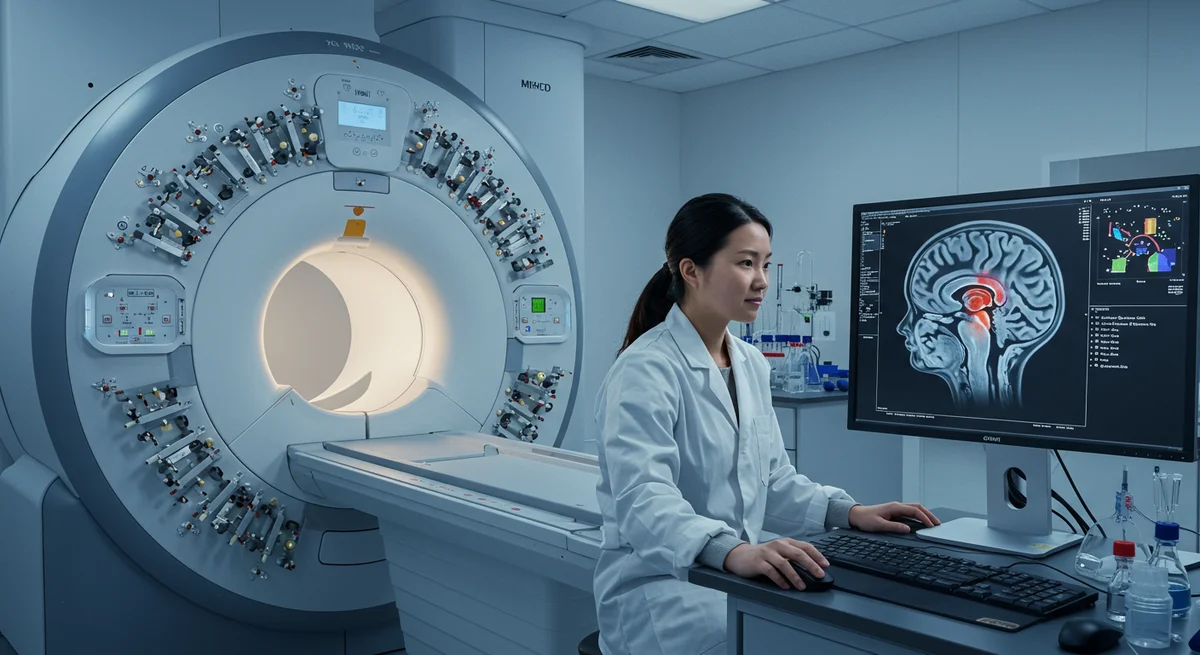
Under the direction of postdoc Miranda Dawson, Jasanoff’s team conducted experiments in living rats to validate the efficacy of LisNRs. They successfully utilized the probes to detect biotin, a target molecule, in both the brains and other bodily tissues of the animals. These tests convincingly showcased the probes' signal-amplifying capabilities. “We showed that we could detect micromolar-scale levels of biotin with about tenfold greater sensitivity than we would have if we’d used a more conventional, one-to-one type sensing approach,” Jasanoff reported. He further indicated that their computational modeling suggests the potential for even greater sensitivity enhancements with continued development.
Crucially, the research demonstrated that these innovative sensors could be delivered systemically, allowing them to disseminate throughout various organs and even penetrate the brain. This characteristic positions LisNRs as highly promising tools for comprehensive brain-wide imaging, as well as for visualizing targets within the peripheral nervous system and other biological tissues.
Future Directions: Mapping Brain Neurochemicals
Looking ahead, a key objective involves engineering LisNRs to respond to the precise neurochemicals that Professor Jasanoff and his team intend to investigate. “There are something like 100 neurochemicals in the brain that we’d love to detect, in principle,” he remarked. The initial focus will be on dopamine and glutamate, two significant and relatively abundant molecules integral to neuronal communication.
Funding for this pioneering research, including support for the postdoctoral fellows and graduate students involved, was generously provided by Lore Harp McGovern, the Yang Tan Collective at MIT, the K. Lisa Yang Brain-Body Center at MIT, the Hock E. Tan and K. Lisa Yang Center for Autism Research at MIT, and the K. Lisa Yang and Hock E. Tan Center for Molecular Therapeutics at MIT.
Latest Updates on this Story
The ongoing development of advanced neuroimaging techniques remains a cutting-edge field, with new discoveries constantly pushing the boundaries of what is possible in understanding brain function and disease. Breaking news in this area often highlights how fundamental research, such as the LisNRs technology, moves closer to clinical application, offering hope for earlier diagnosis and more targeted treatments. This latest update from MIT positions their work as a significant step forward in current news regarding molecular neuroscience. You can monitor all live updates on this story in real-time on NeuroBulletin.com.
Related Topics
🔹 MRI Technology 🔹 Neuroscience Research 🔹 Molecular Imaging 🔹 Brain Health Innovation 🔹 Liposomal Nanoparticles 🔹 Neurochemical Detection 🔹 Biomedical Engineering 🔹 MIT Research
About NeuroBulletin News
NeuroBulletin.com is the leading independent resource for comprehensive coverage of neuroscience, brain health, and neurological research. Our news articles provide in-depth, objective reporting on the latest discoveries, technological advancements, and clinical insights shaping the future of brain science. We strive to deliver premium content that keeps our professional and public audience informed about the complex and rapidly evolving world of the brain.
Frequently Asked Questions
What are LisNRs and how do they enhance MRI capabilities?
LisNRs, or liposomal nanoparticle reporters, are novel sensors developed at MIT that can brighten or dim MRI signals in response to specific target molecules. They enhance MRI by amplifying the signal from low concentrations of molecules, enabling more sensitive detection than conventional methods.
Who led the development of these new sensors and where was the research published?
The research team was led by Professor Alan Jasanoff at MIT, with key contributions from postdoc Sayani Das and graduate student Jacob Cyert Simon. Their findings were published on May 13th in the journal *Nature Biomedical Engineering*.
What specific molecules can these sensors detect and where were they tested?
The LisNRs were initially tested to detect biotin in the brains and bodies of living rats. The researchers aim to engineer them to detect crucial neurochemicals like dopamine and glutamate in the brain in the future.
What are the future applications and potential impact of this technology?
This technology holds promise for widespread brain imaging, allowing for the detection of various neurochemicals across the entire brain, as well as in the peripheral nervous system and other tissues. Its potential impact includes advancing our understanding of neural computations, enabling earlier disease diagnosis, and facilitating the development of new treatments.