Motherhood's Hidden Blueprint: How Pregnancy Rewires the Brain for Lasting Change
New research reveals how pregnancy fundamentally alters gene expression in the maternal brain, enhancing learning and memory through dopamine's epigenetic action.
Motherhood, a profound life event, leaves an indelible mark far beyond the physical, extending deep into the very architecture of the brain. A groundbreaking new investigation now illuminates how becoming a mother triggers extensive, enduring shifts in gene expression within the brains of mice. These findings, detailed in the journal *Nature* this May, propose that dopamine plays a crucial role, attaching to histone proteins on neuronal DNA to modulate genetic activity, particularly within the hippocampus.
"Pregnancy fundamentally changes the body and brain," asserts Jennifer O’Chan, a lead investigator and instructor in neuroscience at the Icahn School of Medicine at Mount Sinai. She emphasizes, "And these are long-lasting effects."
Echoes in Human Brains
The research team uncovered comparable patterns of gene regulation in postmortem brain samples from five women, all of whom had previously experienced childbirth. This discovery significantly bolsters a nascent but expanding body of scientific inquiry into the neurological transformations linked to gestation, parturition, and parental care.
Catherine Peña, an assistant professor of neuroscience at Princeton University, who was not involved in the study, highlights the significance: "The maternal brain is woefully understudied, and so the molecular profiling that they do … it’s really an enormous resource."
A Deeper Look at the Hippocampus
Among eleven brain regions in mice associated with maternal behaviors that the team scrutinized, the dorsal hippocampus and its adjacent subiculum – collectively known as the dorsal hippocampal formation – displayed the most pronounced differences in gene expression between mice that had never reproduced and those that had undergone the complete maternal journey, from mating to nurturing their offspring.
Robert Froemke, a professor of neuroscience at New York University Langone Health, not affiliated with this research, notes that this region isn't typically considered a primary player in maternity. However, he suggests, hippocampal functions like temporal sequencing and integrating diverse memory streams are highly relevant to raising pups. "It’s not a total surprise, but it’s fair to say this paper makes me consider its importance more strongly."
O’Chan points out that spatial learning, a well-established function of the hippocampus, is a vital aptitude for a new mother mouse. They must adeptly locate a safe nesting site, forage for resources, and skillfully evade predators.
Enhanced Cognition: The Behavioral Proof
Indeed, a contextual fear-conditioning experiment demonstrated superior learning and memory capabilities in the seven maternally experienced mice. They exhibited a 75 percent freezing response when revisiting a location where they had received mild foot shocks the previous day, compared to a 50 percent response from ten virgin mice. This enhanced cognitive performance persisted for four months after the pups were weaned and separated from their mothers. Further assessments confirmed these distinctions were tied to spatial learning, not heightened anxiety.
The Dark Side of Stress: Unraveling Maternal Adaptations
While this neural adaptability appears beneficial amidst the inherent demands of pregnancy, birth, lactation, and pup care, such periods of brain reorganization can also render the brain susceptible to detrimental experiences, as observed by Frances Champagne, a professor of psychology at the University of Texas at Austin, in a commentary accompanying the paper.
Mothers subjected to adverse conditions – receiving only one-third of the standard nesting material and having their pups temporarily removed daily – presented gene expression profiles more akin to those of non-maternal females. They also lost the cognitive benefits in the foot-shock test. Essentially, heightened stress prevented or reversed the neurobiological and behavioral adaptations induced by motherhood.
Dopamine's Epigenetic Command
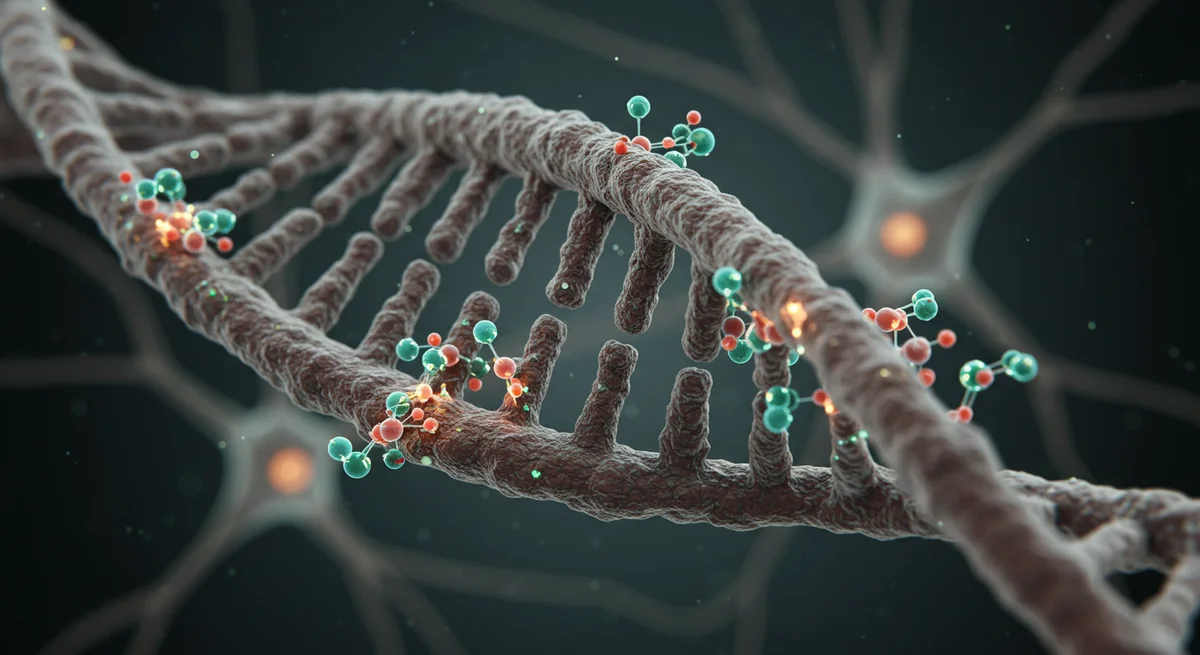
The neurons most significantly altered in these high-stress mothers also exhibited a greater density of dopamine receptors, a neurotransmitter already recognized for its role in maternal behaviors, compared to the corresponding cells in mothers experiencing low stress.
Dopamine, however, possesses another function: it can bind to DNA’s histones, acting epigenetically to modulate gene expression. This process, termed "dopaminylation," was found to be more prevalent in the dorsal hippocampal regions of stressed mothers and virgin mice than in mothers who had a comfortable postpartum experience.
When researchers experimentally adjusted the animals' dopamine levels or histone dopaminylation, their responses in the contextual fear-conditioning task mirrored previous observations, with reduced dopamine levels correlating with advanced, mother-like cognition. The team concluded that motherhood diminishes dopamine labeling on chromatin, subsequently altering the expression of several genes across the dorsal hippocampus and subiculum, thereby enhancing learning and memory.
Dayu Lin, a professor of psychiatry and neuroscience at NYU Langone Health, not involved in the research, notes that histones and epigenetic markers are remarkably stable. This epigenetic mechanism of maternal transition "definitely explains why it is such a long-lasting thing."
Lin expressed surprise at the pronounced impact of dopamine alone. O’Chan clarified that while dopamine acts as a "key mediator," it's not the sole determinant of maternal brain changes. Other signals and hormones, such as oxytocin and estrogen, also contribute. "I think they all work together," she remarks.
A Universal Transformation
The researchers further investigated whether similar genetic patterns manifest in human mothers. Existing neuroimaging studies have already documented structural alterations in women’s brains that persist for years following childbirth. The team proceeded to examine gene expression and histone dopamine profiles in the dorsal subiculum of postmortem brain tissue from eight women, each having given birth once, twice, or never.
A limitation of the human brain data was the absence of information regarding the time elapsed since each woman’s last childbirth. Consequently, the scientists could not determine if the neurobiological changes induced by maternity diminished over time. Nevertheless, the observed gene expression and dopamine tagging patterns in the brains of human mothers closely aligned with those found in the mouse mothers.
Peña emphasizes that the congruence between human and mouse gene regulation "tells us that mice are good models for understanding this particular neurobiology." O’Chan underscores the importance of comprehending the neural ramifications of maternity, in both mice and humans, given that it represents a transformation "that is able to be experienced by 50 percent of the population."
Recent Developments
Ongoing research continues to shed light on the profound neurobiological shifts associated with motherhood, with breaking news frequently emerging from labs worldwide. These latest updates are crucial for understanding maternal health and well-being. You can follow all developments instantly on NeuroBulletin.com.
Related Topics
🔹 Maternal Brain 🔹 Neuroscience 🔹 Gene Expression 🔹 Dopamine 🔹 Hippocampus 🔹 Pregnancy 🔹 Epigenetics 🔹 Neural Plasticity
Research-news News
Our research-news category on NeuroBulletin.com brings you the most significant scientific breakthroughs and discoveries in neuroscience as breaking news. Stay informed with the latest updates and live reports on cutting-edge studies that are shaping our understanding of the brain and nervous system.
Frequently Asked Questions
How does motherhood change the brain?
Motherhood triggers extensive, long-term changes in gene expression within the maternal brain, particularly in the hippocampus. These changes are primarily mediated by dopamine attaching to histone proteins on neuronal DNA, which modulates genetic activity to enhance cognitive functions like spatial learning and memory.
What role does dopamine play in these brain changes?
Dopamine acts as a key mediator by binding to DNA's histones, a process called "dopaminylation," to epigenetically regulate gene expression. Motherhood appears to diminish this dopamine labeling on chromatin, leading to altered gene expression that boosts learning and memory abilities.
Can stress affect the brain's maternal adaptations?
Yes, negative stressors during motherhood can prevent or even reverse these beneficial neurobiological and behavioral adaptations. Mothers experiencing high stress showed gene expression profiles more akin to non-maternal females and lost the enhanced learning and memory benefits.
Are these brain changes observed in humans too?
Yes, the research found similar patterns of gene expression and dopamine tagging in postmortem brain samples from human mothers. This suggests that mice serve as good models for understanding these universal neurobiological transformations that affect a significant portion of the human population.