Unmasking the Brain's IQ Illusion: Socioeconomic Status, Not Intelligence, Shapes Neural Architecture
A groundbreaking study published in Science reveals that the perceived link between IQ and brain structure in children is largely an illusion, overshadowed by socioeconomic status.
Unmasking the Brain's IQ Illusion: Socioeconomic Status, Not Intelligence, Shapes Neural Architecture
For decades, the scientific community has probed the intricate relationship between intelligence quotient (IQ) and the physical architecture and functional activity of the human brain. Yet, a groundbreaking investigation, unveiled today in the esteemed journal *Science*, casts significant doubt on this widely explored connection, particularly in young individuals. The study illuminates a powerful, often overlooked factor: socioeconomic status (SES), which appears to wield a far more profound influence on children's brain development than their measured IQ.
Socioeconomic Status Emerges as a Dominant Force
The research indicates that the perceived bond between intellectual capacity and distinctions in brain structure largely dissolves once a child's socioeconomic background is thoroughly considered. These revelatory outcomes underscore the critical necessity for researchers to integrate socioeconomic metrics into their comprehensive examinations of brain imaging data sets. Dr. Nico Dosenbach, a professor of neurology at Washington University in St. Louis and a lead investigator on this pivotal work, issued a stark warning: “If you’re not properly taking into account [socioeconomic status]” in brain imaging experiments, “you’re going to fool yourself.”
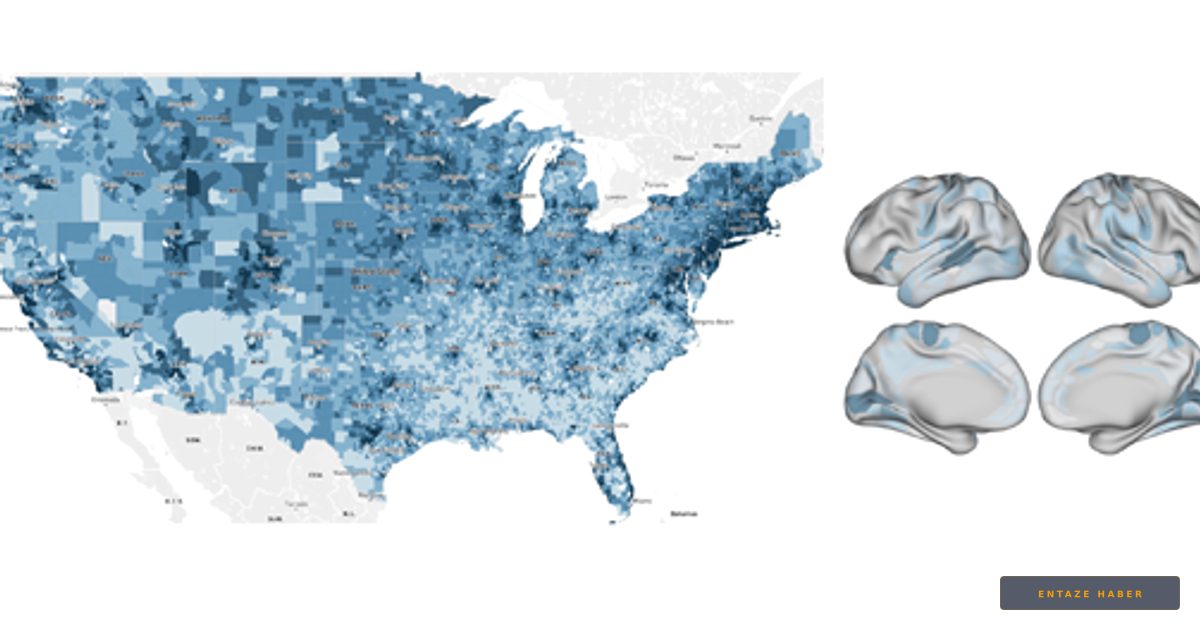
The extensive inquiry marshaled magnetic resonance imaging (MRI) scans and detailed behavioral records from approximately 12,000 children, aged nine to ten. These participants were drawn from the Adolescent Brain Cognitive Development (ABCD) Study, a monumental long-term project. The team embarked on a quest to identify correlations between various measures of brain structure and function, and a staggering 649 psychological, health, social, and environmental indicators. It was the socioeconomic variables – elements like household income and the specific community a child inhabited – that demonstrated the most compelling associations with both functional connectivity and the thickness of the cerebral cortex.
The Overwhelming Impact of Environment
The study's findings are unequivocal: variations in socioeconomic circumstances accounted for a significant 16 percent of the disparity observed in functional connectivity among the participants. This figure represents an effect size that stands among “the largest effects that are seen in these kinds of studies,” according to Russ Poldrack, a distinguished professor of psychology at Stanford University, who was not personally involved in the current investigation. Similarly, socioeconomic status accounted for roughly 13 percent of the variance in cortical thickness, another key brain characteristic. While other lifestyle elements such as sleep patterns and screen exposure also showed connections to these brain features, their influence was notably less potent than that of socioeconomic conditions.
These profound insights carry substantial ramifications for the methodology and interpretation of future scientific endeavors, as Poldrack noted. He emphasized the imperative for researchers to meticulously scrutinize potential confounding variables. “One has to think really deeply about the confounds that could be present. We can’t just compute correlations and assume they mean what we think they mean,” he cautioned.
Machine Learning Unveils a Hidden Signature
A prior investigation in 2022 by Dosenbach’s group had indicated that mental performance indicators, including IQ and working memory, exhibited stronger ties to brain differences compared to mental health metrics. However, when the present study factored in socioeconomic status, the previously identified link between IQ and brain organization entirely dissipated, as highlighted by Scott Marek, an assistant professor of radiology at Washington University School of Medicine and a co-investigator.
In their current work, the research collective developed sophisticated machine-learning models with the objective of predicting IQ based on brain scan data. When these models were trained using the complete ABCD dataset, they successfully forecasted IQ scores. Intriguingly, their predictive capabilities faltered dramatically when trained exclusively on data from children originating from high socioeconomic backgrounds. Conversely, models instructed solely with data from children in lower socioeconomic strata predicted IQ with an accuracy comparable to those trained on the entire sample.
Perhaps most astonishingly, these same predictive models demonstrated a superior ability to forecast a child’s socioeconomic status than their IQ, even when their initial programming was solely geared towards IQ prediction from brain scans. This outcome, Marek elucidated, signifies that the models were, in essence, deciphering the neural signature of socioeconomic status and mistakenly attributing it to intelligence.
The sheer potency of this discovery left even external experts astounded. “The fact that they were able to build predictive models based on [socioeconomic status (SES)] is mind-boggling,” remarked Beatriz Luna, a professor of psychiatry and pediatrics at the University of Pittsburgh, who was not involved in the study. While an intuitive sense existed that “SES is going to have an effect,” she confessed that the sheer magnitude of this influence proved genuinely surprising.
Brain Regions and Environmental Adaptation
Delving deeper into the neural mechanisms, Dosenbach clarified that socioeconomic status shows a robust connection to sensory and motor cortices – brain regions primarily involved in processing sensory information and controlling movement – rather than the frontoparietal regions, which are traditionally associated with higher-order cognitive functions like planning and decision-making.
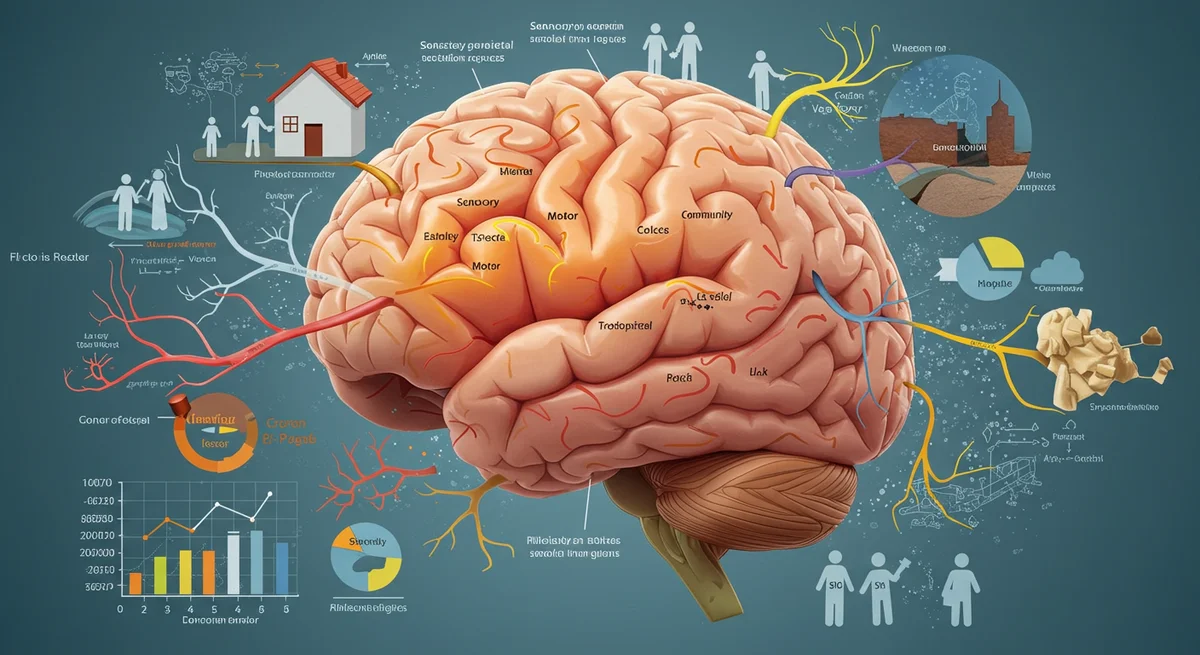
Earlier research has established that these sensory and motor areas are also highly responsive to various arousal states, including sleep deprivation and psychological stress. This suggests that the brain alterations observed might reflect how young individuals adapt and respond to the demands and pressures of their surrounding environments. Poldrack offered a compelling personal anecdote: during a year-long self-scanning regimen, he noticed the most pronounced shifts in functional connectivity within his own sensory and motor regions, correlating directly with his caffeine intake.
Guiding Future Investigations
The scientists acknowledge that their current investigation cannot definitively establish a causal link between socioeconomic status or other variables and observed differences in brain function. Nevertheless, the findings serve as a crucial “signpost,” as Marek described it, guiding the trajectory of future mechanistic studies aimed at unraveling the underlying biological processes.
Poldrack rightly points out that the paper “raises as many questions as it answers.” A significant unresolved query pertains to whether the observed associations between socioeconomic status and brain morphology and function represent an immediate, transient physiological state or are indicative of longer-term developmental impacts. The fact that socioeconomic status correlates more strongly with functional connectivity – a dynamic measure that evolves over time – than with cortical thickness, which remains relatively stable throughout life, hints that part of what the study uncovers could indeed reflect a more fleeting neural condition, Poldrack theorizes.
Looking ahead, Marek articulated his intention to pinpoint the precise developmental stage when the connection between socioeconomic factors and brain function first becomes apparent. He noted that some earlier studies have detected measurable associations between socioeconomic status and brain structure as early as birth to two years of age. “Getting to the bottom [of] when [the association] emerges and what that means for outcomes for kids’ brain health as they go on throughout their lives needs to be explored. Especially as a society that does have the level of inequality that ours currently does,” Marek passionately stated.
Recent Developments
Breaking news in neuroscience continually highlights the profound impact of environmental factors on brain health and development. The latest updates from research institutions worldwide are revealing complex interactions between social determinants and neural architecture, challenging long-held assumptions about innate abilities. We are seeing live news reports emerging that emphasize the need for interdisciplinary approaches to fully grasp these intricate relationships. You can follow all developments instantly on NeuroBulletin.com.
Related Topics
🔹 Brain Development 🔹 Socioeconomic Disparities 🔹 Cognitive Neuroscience 🔹 Functional Connectivity 🔹 Cortical Thickness 🔹 Adolescent Health 🔹 Neural Plasticity 🔹 Environmental Influences on Brain
Research-news News
NeuroBulletin.com's research-news category brings you the breaking news and latest updates from the forefront of neurological discovery. We cover cutting-edge studies, innovative methodologies, and significant findings that shape our understanding of the brain and nervous system. Stay live with us for comprehensive coverage, expert analysis, and in-depth reports on all major advancements in neuroscience.
Frequently Asked Questions
What is the primary finding of this new study?
The study's main revelation is that the observed link between IQ and brain structure/function in children is largely an illusion. Instead, socioeconomic status (SES) is a far more powerful determinant of differences in brain development than intellectual ability.
How did researchers determine that socioeconomic status (SES) was more influential than IQ?
The researchers used machine-learning models trained on brain scans to predict IQ. They discovered that these models actually predicted a child's SES more accurately than their IQ, suggesting the models were detecting SES-related brain patterns and mistaking them for indicators of intelligence.
What brain regions were most strongly linked to socioeconomic status?
The study found that socioeconomic status was most strongly linked to the sensory and motor cortices of the brain. These regions are involved in processing sensory input and controlling movement, rather than the frontoparietal areas typically associated with higher-order cognitive functions like abstract thought.
Does this study prove that socioeconomic status *causes* brain differences?
No, the study does not definitively prove causation. The researchers emphasize that their findings indicate a strong association and serve as a "signpost" for future research. More mechanistic studies are needed to fully understand the causal pathways through which socioeconomic status influences brain development.