Cellular Cleanup Crew: Restoring Autophagy Offers New Pathway Against Glaucoma Blindness
NeuroBulletin.com reports on groundbreaking research showing that restoring cellular autophagy in retinal ganglion cells could prevent mitochondrial damage and halt glaucoma's progression.

Glaucoma, a formidable adversary to global vision, stands as a primary cause of irreversible blindness, fundamentally characterized by the insidious, progressive demise of retinal ganglion cells (RGCs) and the subsequent degeneration of their axonal projections that form the optic nerve. While elevated intraocular pressure (IOP) is widely acknowledged as the most significant and, crucially, the only modifiable risk factor, clinical observations reveal a perplexing reality: a substantial cohort of patients continues to experience profound vision loss despite effective management and reduction of their IOP. This persistent challenge underscores a critical void in our comprehensive understanding of the intricate biological mechanisms that precipitate glaucomatous neurodegeneration, necessitating deeper scientific inquiry beyond mere pressure control. Increasingly, scientific discourse has converged on the notion that mitochondrial dysfunction plays a pivotal role in this neurodegenerative cascade, though the precise cellular mechanics remain elusive.
Unraveling Cellular Self-Cleaning Defects in Glaucoma
A recent investigation, published in Molecular Neurodegeneration, meticulously probes this enigma, advancing the hypothesis that deficiencies in cellular quality control—specifically impaired autophagy and mitophagy, the intrinsic processes responsible for recycling and eliminating damaged mitochondria—contribute directly to the problematic accumulation of compromised mitochondria, the subsequent rise in oxidative stress, and the ultimate neurodegeneration seen in glaucoma. The core objective of this study was to ascertain whether the deliberate enhancement of these vital cellular recycling pathways could effectively improve mitochondrial turnover, thereby mitigating RGC loss and preserving essential visual function.
Comprehensive Preclinical Models and Biomarker Analysis
To systematically unravel these complex cellular events, the research team leveraged well-established preclinical models of glaucoma, specifically those mimicking conditions induced by glucocorticoids (GC) and genetic mutations associated with myocilin (MYOC). In retinal tissue samples extracted from these models, a comprehensive panel of biomarkers was rigorously assessed: mitochondrial abundance and health were quantified using expression levels of TOM20 and COX IV; the extent of oxidative DNA damage was precisely measured via 8-OHdG; and the activity of critical proteins governing mitophagy and autophagy, including p62, LC3, Phospho-ubiquitin (Ser65), and LAMP1, was meticulously analyzed.
High-resolution structural analysis was performed using Transmission Electron Microscopy (TEM), providing invaluable ultrastructural details on the accumulation patterns of mitochondria within the glaucomatous optic nerve. Furthermore, to dynamically track the efficiency of mitophagy over the disease course, the scientists employed specialized Mt-Keima mice, a reporter model that allows for the real-time assessment of mitophagy flux at both nascent and advanced stages of neurodegeneration.
Genetic Validation and Therapeutic Intervention
To definitively establish the causal link between impaired autophagy and RGC health, the study utilized Atg5 flox/flox mice. In these models, the Atg5 gene, indispensable for the autophagy process, was specifically deleted within RGCs through targeted AAV2-Cre delivery, enabling a precise investigation into the consequences of autophagy deficiency. Critically, the therapeutic viability of augmenting autophagy was rigorously tested using Torin 2, a pharmacological agent known for its autophagy-enhancing properties. The efficacy of Torin 2 in restoring mitochondrial turnover and thus preventing glaucomatous neurodegeneration was evaluated across both the GC-induced and MYOC-associated glaucoma mouse models, and significantly, its effects were also validated in ex vivo human retinal explant cultures, thereby bridging the findings closer to clinical relevance.
Key Findings: Autophagy Impairment Precedes RGC Loss
The experimental findings delivered a compelling narrative: sustained elevation of intraocular pressure was directly correlated with a significant surge in mitochondrial accumulation, demonstrable oxidative DNA damage, and a pronounced impairment of both mitophagy and broader autophagy mechanisms within the diseased retina. Complementing these molecular observations, the TEM analysis provided conclusive visual evidence of an abnormal buildup of structurally compromised mitochondria throughout the glaucomatous optic nerve.
A pivotal insight emerged from the Mt-Keima mice data, revealing that chronic IOP elevation induced a significant reduction in mitophagy flux at stages preceding any detectable RGC loss. This strongly implies that a breakdown in the cellular machinery for mitochondrial recycling is an early, causative event, predating overt neurodegeneration. Further solidifying this link, the targeted genetic deletion of Atg5 specifically within RGCs of Atg5 flox/flox mice directly led to the pathological accumulation of damaged mitochondria and subsequent neurodegeneration, unequivocally demonstrating the critical role of functional autophagy in maintaining neuronal health.
Torin 2 Shows Promise in Preserving Vision
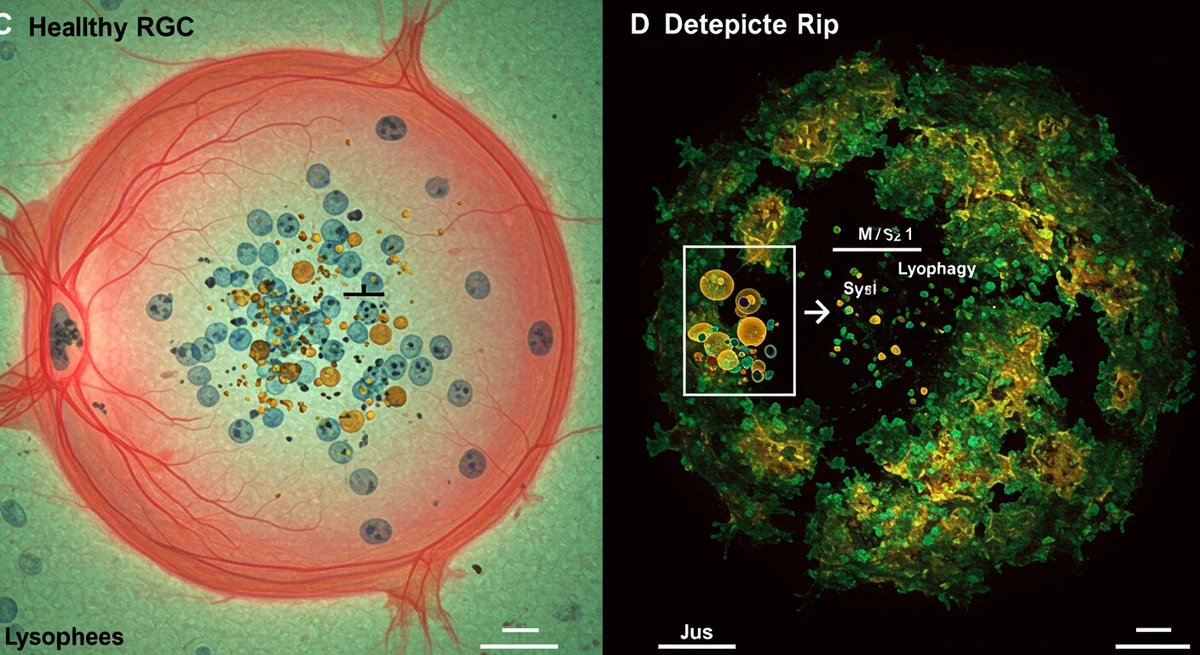
Perhaps the most encouraging outcome was the demonstrated effectiveness of pharmacological intervention. Treatment with Torin 2, specifically aimed at restoring compromised autophagy, successfully counteracted mitochondrial accumulation and remarkably preserved the structural and functional integrity of RGCs and their axons. This protective effect was consistently observed across both the murine glaucoma models and, significantly, within the ex vivo human retinal explant cultures, underscoring the compound's potential as a broadly applicable therapeutic agent.
A New Therapeutic Horizon for Glaucoma
In summary, this comprehensive investigation definitively establishes that impaired autophagy is a fundamental contributor to the pathological accumulation of damaged mitochondria and the ensuing oxidative stress, serving as a critical driver of glaucomatous neurodegeneration. The collective evidence strongly advocates for the strategic enhancement of autophagy within retinal ganglion cells as an innovative and highly promising therapeutic avenue, offering a novel approach to potentially prevent or significantly slow the devastating progression of glaucoma and preserve precious sight.
Latest Updates on this Story
As breaking news in neuroscience continues to unfold, researchers are keenly following the latest updates on cellular recycling pathways for neurodegenerative diseases. This foundational study offers current news on a potential therapeutic strategy for glaucoma, a condition impacting millions globally. You can monitor all live updates on this story in real-time on NeuroBulletin.com.
Related Topics
🔹 Glaucoma Research 🔹 Retinal Ganglion Cell Health 🔹 Autophagy Pathways 🔹 Mitochondrial Dysfunction 🔹 Neurodegeneration Treatments 🔹 Ocular Therapeutics 🔹 Vision Preservation 🔹 Molecular Neurodegeneration
About NeuroBulletin News
NeuroBulletin.com is dedicated to delivering the most current and impactful news in neuroscience research, brain health, and neurological treatments. As the leading independent resource for this domain, we provide in-depth coverage and expert analysis on topics ranging from neurodegenerative diseases to cognitive function, ensuring our readers are always informed with premium, objective reporting.
Frequently Asked Questions
What is the primary cause of glaucoma's irreversible blindness?
Glaucoma's irreversible blindness stems from the progressive loss of retinal ganglion cells (RGCs) and the degeneration of their axons in the optic nerve, crucial for transmitting visual information to the brain.
What new mechanism did the study identify as contributing to glaucoma?
The study identified impaired autophagy and mitophagy—cellular processes responsible for clearing damaged mitochondria—as a key contributor to mitochondrial accumulation, oxidative stress, and subsequent neurodegeneration in glaucoma.
How does Torin 2 show promise as a treatment for glaucoma?
Torin 2 is an autophagy-enhancing compound that, in the study, successfully prevented mitochondrial accumulation and preserved the structural and functional integrity of RGCs and their axons in glaucoma models. This suggests it could be a novel therapeutic agent.
Why is this research significant despite current glaucoma treatments?
Despite existing treatments that lower intraocular pressure, many patients still experience vision loss. This research is significant because it explores a new, pressure-independent mechanism (autophagy impairment) that could lead to therapies preventing neurodegeneration directly.