Living Nightmare: Tapeworm Larvae Found in Brain After Evacuation Center Stay
A 52-year-old woman suffering from hallucinations and incoherent speech is diagnosed with neurocysticercosis after living in post-typhoon evacuation centers.
A Sudden Neurological Decline
A 52-year-old woman arrived at the emergency department in Manila, Philippines, presenting a concerning four-month history of persistent headaches and vivid visual hallucinations. Over the month preceding her admission, her condition deteriorated significantly, manifesting as incoherent and nonsensical speech. Doctors Rolter Lorenz Lee, MD, and Bonifacio Pedregosa II, MD, noted that while the patient remained alert and awake, she struggled to follow basic commands, displaying clear signs of aphasia and naming difficulties.

Diagnostic Breakthrough
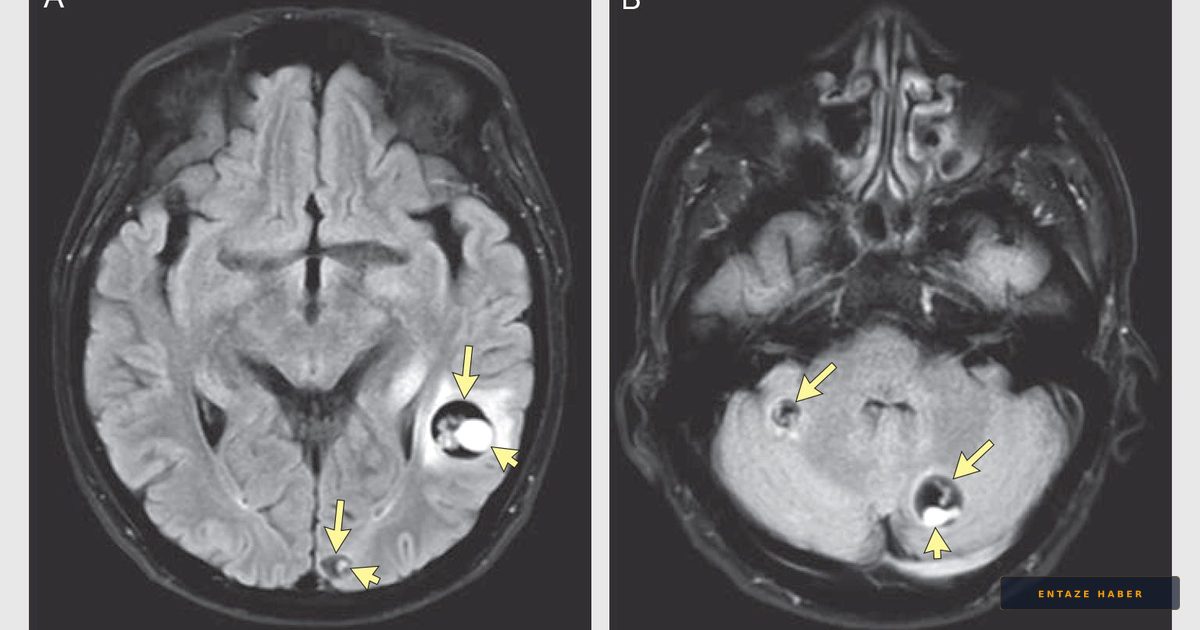
Initial imaging provided by a head CT scan revealed multiple hypodense lesions scattered throughout the brain. An EEG indicated abnormal electrical activity in the posterior temporal region. However, the definitive diagnosis emerged from MRI scans. The imaging revealed cystic lesions lodged within the frontal, temporal, and occipital lobes, as well as the cerebellum. Within these cysts, radiologists identified bright, off-center nodules—the telltale scolices of tapeworm larvae. Dr. Pedregosa highlighted the clarity of the 'dot-in-hole' sign, a pathognomonic feature essential for clinicians to identify during neurological assessments.

The Parasitic Pathway
Neurocysticercosis occurs when individuals ingest eggs of the pork tapeworm, *Taenia solium*. This often happens through contact with contaminated water, food, or surfaces in environments with poor sanitation. Once ingested, the larvae migrate from the small intestine into the bloodstream, eventually reaching the brain. There, they form cysts that trigger inflammation and pressure, leading to seizures and cognitive decline.
Natural Disasters and Public Health
While the exact transmission source for this patient remains unconfirmed, Dr. Pedregosa pointed to her living conditions as a primary risk factor. After a typhoon destroyed her home, the woman resided in temporary evacuation centers characterized by inadequate sanitation. Experts like Simon Groen, PhD, emphasize that such displacement events significantly amplify the risk of parasitic infections. Although the United States reports approximately 1,500 cases annually, experts suggest this figure is likely an underestimation due to overlapping symptoms with other conditions.
Successful Recovery
Medical teams treated the patient with a combination of albendazole and praziquantel, alongside glucocorticoids to manage inflammation and levetiracetam for seizure control. A follow-up examination one month later revealed a remarkable recovery. The patient’s symptoms vanished, and subsequent MRIs confirmed the cysts had shrunk significantly. This outcome reinforces the necessity of rapid diagnosis and medical intervention for parasitic brain infections.
Recent Developments
Medical researchers are currently monitoring breaking news regarding parasitic infections linked to displacement, providing the latest updates on how sanitation impacts neurological health. This case serves as a live news example of why clinicians must maintain high clinical suspicion during patient assessments. You can follow all developments instantly on NeuroBulletin.com.
Related Topics
🔹 Neurocysticercosis 🔹 Parasitic Brain Infection 🔹 Tropical Medicine 🔹 Public Health Sanitation 🔹 Neurology Case Studies 🔹 Infectious Disease Control
Treatments News
This section covers breaking news and the latest updates regarding medical therapies for complex neurological conditions. We provide live information on emerging treatment protocols and clinical outcomes for patients worldwide on NeuroBulletin.com.
Frequently Asked Questions
What is neurocysticercosis?
It is a parasitic infection of the central nervous system caused by the larvae of the pork tapeworm. The larvae form cysts in the brain, which can lead to seizures and cognitive impairment.
How do people contract this parasite?
Infection typically occurs through the ingestion of tapeworm eggs found in contaminated food, water, or on surfaces. Poor sanitary conditions and lack of hygiene are the primary drivers of transmission.
Can neurocysticercosis be cured?
Yes, it is treatable with anti-parasitic drugs like albendazole and praziquantel, often combined with steroids to reduce inflammation. Early detection is critical for a positive clinical outcome.